
Australian Financial Review Coverage: Victoria’s Iona sees big future for gas, plots massive expansion by Ryan Cropp
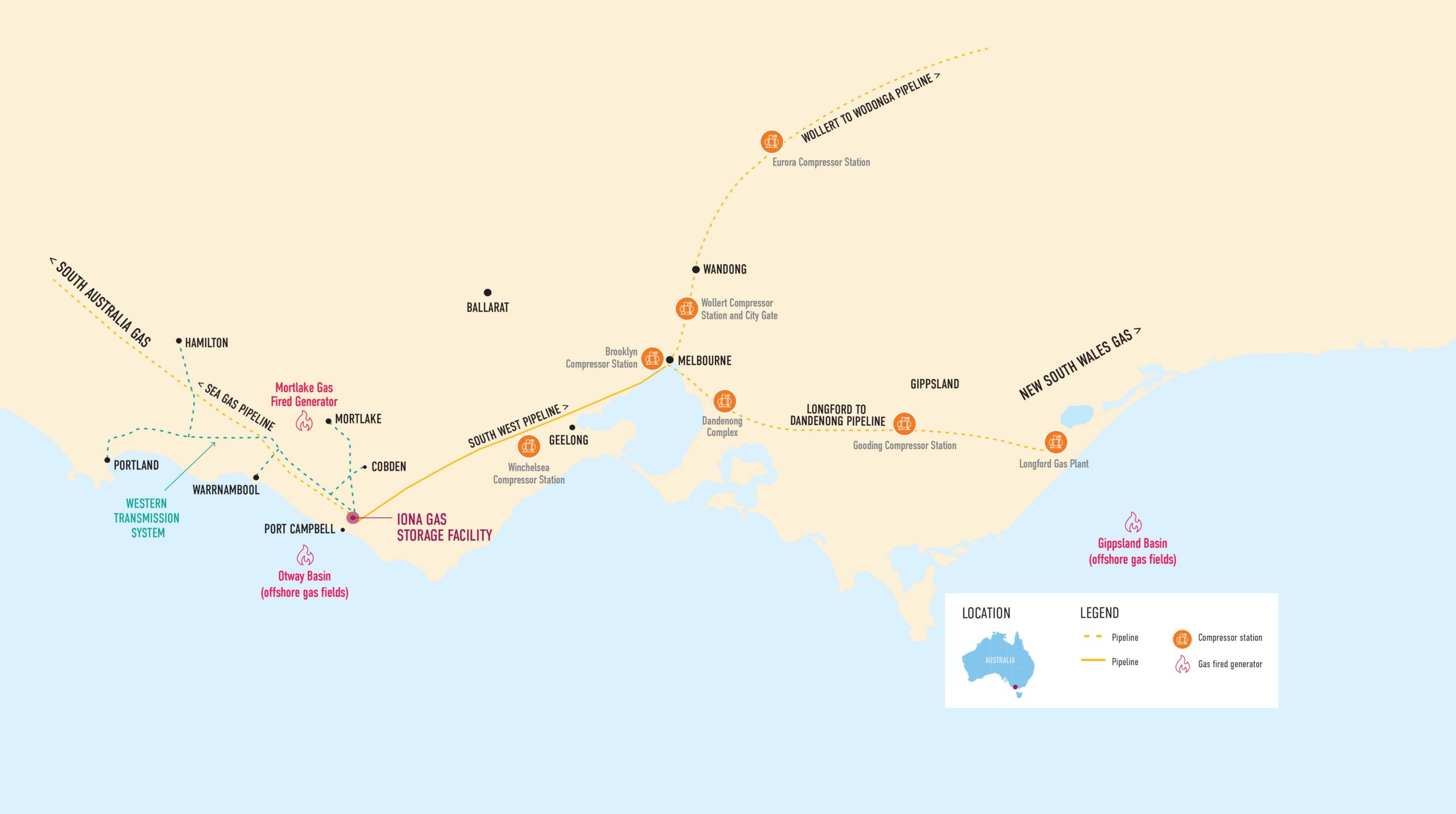
Thank you to Ryan Cropp at The Australian Financial Review for the coverage on next phase of expansion at Iona, the Heytesbury Underground Gas Storage Project Phase 2 (HUGS2), and its future role in supporting Victoria’s energy reliability and security. Read the article published on 1 May 2026 here or below.
Victoria’s Iona sees big future for gas, plots massive expansion
The Australian Financial Review by Ryan Cropp. Published 1 May 2026.
Article link: Expansion plans for Victoria’s gas supply under way ahead of forecast power crunch
The owner of Victoria’s major gas storage facility says it has begun planning and engineering a major extension of the plant, a development that would increase its size by one-fifth ahead of the closure of big coal generators.
Lochard Energy, which owns the Iona gas storage plant in south-west Victoria, has begun early works on a major new expansion, prompted partly by the likely increase in gas demand from planned coal closures.

The Iona gas storage facility in Victoria. Its operator is working on a major expansion plan. Damian White
The plant has the capacity to supply half the state’s gas needs during winter, when cold weather and short days drastically increase the demand for the fuel for power and heating in the country’s most gas-dependent state.
But dwindling supplies of gas in the Bass Strait and Otway basins have led to repeated warnings of shortfalls in Victoria from the Australian Energy Market Operator and the Australian Competition and Consumer Commission.
One of the state’s biggest coal plants – Energy Australia’s Yallourn in the La Trobe Valley – is also due to close in 2028, which is set to increase the state’s reliance on gas amid a slow rollout of replacement renewable power.
“Historically, gas has been used for providing heating to Victorian households. But as households electrify, that same gas demand is being used to back up renewables and provide that winter [power] supply,” he said.
“When Yallourn goes, there’s a big, significant piece of dispatchable capacity that [is missing] because there’s no new gas generation in Victoria, so the existing gas generation fleet will need to be running potentially longer.
Gas is expected to play a key role as a back-up for renewable power sources in the grid, but the extent of its role is disputed as a massive boom in battery storage increasingly carves into its share of supply during evening demand.
High renewables and battery penetration in the first three months of the year pushed gas generators to their lowest average share for any quarter since 1999, according to the Australian Energy Market Operator.
The Allan government has also introduced policies designed to wean the state off the fuel, including a phase-out of gas hot water systems in new homes and a ban on gas connections for major developments.
But Jessen said gas use was highly variable by season, with low demand during the warmer months offset by a surge during winter.
“We don’t see that the peak in winter is going to decline,” he said. “The total volume of gas used in Victoria is going to decline as we electrify. But that peak day rate – and how often we need it – we don’t see that changing because it gets picked up by the [power generation] load.”
Lochard’s proposal would increase the capacity of the Iona plant by around five petajoules – up from 26.2 petajoules. Victoria uses around 180 petajoules of gas each year. Iona – the biggest independent storage provider on the east coast grid – plays a major role in stabilising and smoothing out supply, especially when pipeline and production capacity hit limits during winter.
Lochard has been expanding the amount of gas that can be withdrawn from Iona at any time through its HUGS project, which will give it the capability to supply up to 45 per cent of the peak demand in Melbourne by 2027.
The gas at Iona is compressed and stored in natural reservoirs about 1.5 kilometres underground, and the proposed expansion of the facility would require extensive new drilling and engineering work.
Jessen said Lochard would undertake engineering and commercial assessments and regulatory planning over the next 18 months, but a final investment decision would require buyers signing on to contracts.
An earlier stage of the Iona expansion, which lifted storage capacity by just under 3 petajoules to its current size, was underwritten by a 25-year offtake agreement with the federal government-owned Snowy Hydro.
Andrew Richards, who leads a peak body representing large industrial energy users, said the announcement showed an increasing level of confidence in the future of gas in Victoria.
“Around 18 months or two years ago, companies would not have had the confidence to try to get to financial close on a project like this,” he said.
“They’ve got confidence now that gas is not the devil’s fuel – people have realised it’s required. It’s got a meaningful future.”